


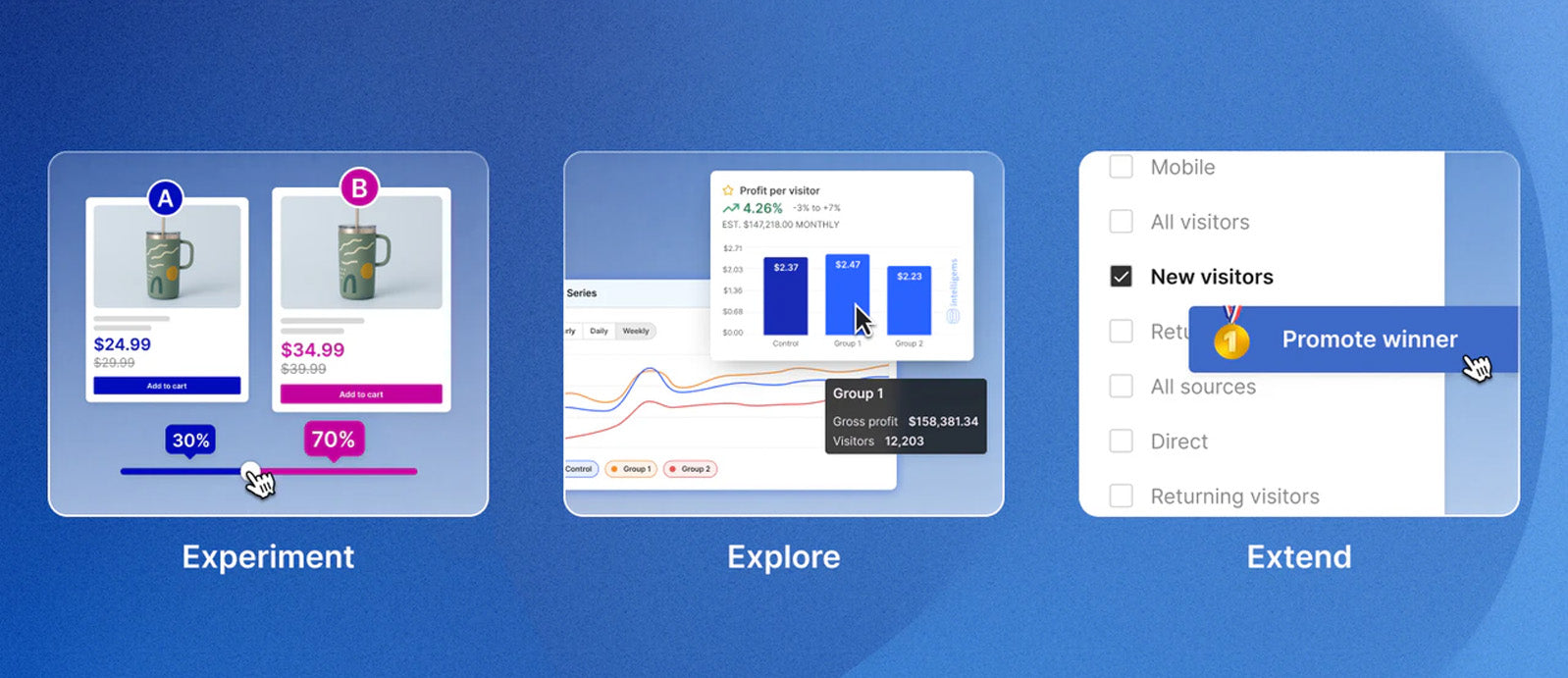
Most brands get A/B testing wrong.
They test button colors, font sizes, tiny tweaks and expect big wins. Nothing moves. Then they assume “testing doesn’t work.”
That’s not the problem.
The problem is what you’re choosing to test.
At WTF, we don’t start with small experiments. We start with the parts of your store that actually influence buying decisions. Because when you test the right things, even small changes can unlock disproportionate growth.
Here’s where we always begin.
1. Your Above-the-Fold Section (This Is Make or Break)
This is the first thing people see. And most stores waste it.
Generic headlines. Pretty banners. No real reason to stay.
We’ve seen bounce rates drop just by changing what the brand says upfront.
While working on The Plated Project, we built the first fold by carefully placing all key elements: headline, product focus, visual hierarchy, and CTA right in the center. The idea was simple: everything important, instantly visible. That balance made the section feel intentional and perform better.
What to test:
-
Headline (aesthetic vs benefit-driven)
-
Subtext (emotional vs functional)
-
First CTA (Shop Now vs Explore vs Category-led)
If this section doesn’t hook, nothing below matters.
2. Product Page Structure (Not Just Design)
Most Shopify stores treat product pages like static catalogs. But this is where decisions happen.
Testing here isn’t about moving things around randomly it’s about understanding what information your customer needs to feel confident.
For Nama Home, we leaned into a clean, minimal aesthetic letting the product take center stage. The layout was intentionally uncluttered, with strong hierarchy and spacing to reinforce a premium feel.
What to test:
-
Placement of key information (USP, fabric, fit, care)
-
Trust elements (reviews, guarantees, delivery timelines)
-
Content blocks vs long descriptions
You’re not just testing layout, you’re testing perception.
3. Your Add-to-Cart Experience
This is one of the most overlooked areas.
Most brands obsess over getting users to the product… and ignore what happens when they’re ready to buy.
We’ve seen drop-offs happen right here.
For The Plated Project, we reimagined the add-to-cart experience to feel more engaging, introducing milestones, personalisation, rewards, and a smoother, almost gamified flow. It didn’t just reduce friction, it made the journey feel rewarding.
What to test:
-
Sticky vs static Add to Cart button
-
Quick add vs full product page flow
-
Cart drawer vs redirect to cart page
Even small friction here directly impacts revenue.
4. Pricing & Offer Presentation
It’s not always about changing your pricing, it’s about how you present it.
The same price can feel premium, reasonable, or expensive depending on context.
We’ve tested this across multiple stores, and sometimes just reframing the offer outperformed actual discounts.
What to test:
-
Showing discounts vs highlighting value (fabric, craftsmanship, exclusivity)
-
Bundles vs single product pricing
-
Limited-time messaging vs evergreen positioning
Perception drives action more than numbers.
5. Collection Pages (Your Hidden Conversion Layer)
Collection pages are often ignored or treated like simple grids.
But for many users, this is where they decide whether to explore further or leave.
We’ve worked on stores where optimizing collection pages improved not just clicks—but overall session value.
What to test:
-
Grid density (more products vs more breathing space)
-
Filters visibility and usability
-
Adding subtle storytelling (not just products, but context)
Collections aren’t just navigation they’re discovery.
6. Trust Signals (Subtle, But Powerful)
People don’t always consciously notice trust elements but they feel their absence.
And when they do, hesitation creeps in.
Instead of adding everything everywhere, we test placement and relevance.
For Amber Stitch, we designed custom trust icons that felt completely native to the brand subtle, clean, and aligned with the visual language. It elevated credibility without disrupting the aesthetic.
What to test:
-
Reviews near CTA vs below the fold
-
Delivery timelines visibility
-
Return/exchange messaging placement
Trust isn’t built in one section it’s layered across the journey.
7. Checkout Friction (Where Revenue Quietly Drops)
You can do everything right and still lose conversions at checkout.
We’ve seen this happen more times than we can count.
Sometimes it’s unexpected shipping costs. Sometimes it’s too many steps. Sometimes it’s just lack of clarity.
What to test:
-
Guest checkout vs forced login
-
Shipping cost visibility earlier in journey
-
Simplified checkout fields
This isn’t glamorous but it’s where real money is won or lost.
A/B testing isn’t about running more experiments.
It’s about running better ones.
When you test the right things, you don’t need 50 experiments you need a few that actually matter.
Because growth doesn’t come from tweaking the surface.
It comes from understanding what makes someone pause, consider… and finally, buy.
Share:
Technical SEO for E-commerce: Fixing the Silent Issues That Kill Your Rankings
Email Deliverability Guide: How to Land in the Inbox, Not Spam